The Self-help Resource Center for Vision Loss
contrast

A A
font
A A A
    Register | Log In

Identifying Paper Money and Coins If You are Blind or Have Low Vision

Legislation Update Alert #5: Meaningful Access Recommendations Approved by the Secretary

May 31, 2011: Secretary of the Treasury Timothy F. Geithner approved the methods that the Department of the Treasury will use to provide blind and visually impaired individuals with meaningful access to U.S. currency. The Secretary approved that The Bureau of Engraving and Printing (BEP) will implement the following accommodations:

Tactile Feature: Adding a raised tactile feature to U.S. currency unique to each U.S. Federal Reserve note that it may lawfully change, which will provide users with a means of identifying each denomination via touch.

High Contrast Numerals: Continuing the program of adding large high contrast numerals and different colors to each denomination.

Currency Reader Program: Implementing a supplemental currency reader distribution program for blind and visually impaired U.S. citizens and those legally residing in the U.S.

You can read more about the process at the U.S. Bureau of Printing and Engraving: Meaningful Access Study.

Legislation Update Alert #4: Bureau of Engraving and Printing Launches EyeNote™App

April 21, 2011: The Bureau of Engraving and Printing (BEP) has developed a free downloadable application (app) to assist the blind and visually impaired denominate US currency. The app is called EyeNote™. EyeNote™ is a mobile device app designed for Apple iPhone (3G, 3Gs, 4), and the 4th Generation iPod Touch and iPad2 platforms, and is available through the Apple iTunes App Store.

EyeNote™ uses image recognition technology to determine a note's denomination. You can read more about the process at the EyeNote™ App Overview.

Legislation Update Alert #3: Accessible Paper Currency

May 19, 2010: The Department of the Treasury (Treasury) and the Bureau of Engraving and Printing (BEP) are issuing this Federal Register Notice pursuant to the ruling in American Council of the Blind v. Paulson that ordered Treasury to provide meaningful access to U.S. currency to people who are blind and visually impaired.

Summary of Proposed Design Modifications: Based upon the Study's findings and BEP's own expertise in manufacturing U.S. currency, BEP proposes to recommend to the Secretary of the Treasury the following:

I. Tactile Feature: BEP will develop and deploy a raised tactile feature.

II. Large, High-Contrast Numerals: BEP will continue its practice of adding large, high-contrast numerals and different and distinct color schemes to each denomination.

III. Supplemental Currency Reader Program: BEP also proposes to recommend a supplemental measure that involves a process to loan and distribute currency readers to the blind and visually impaired at no cost to them.

You can read more about this process at Meaningful Access to United States Currency for Blind and Visually Impaired Persons.

Legislation Update Alert #2: Accessible Paper Currency

August 18, 2009: As part of its effort "to create meaningful access to currency for the blind and visually impaired," the Bureau of Engraving and Printing (BEP) announced the results of a study analyzing options to assist the blind and visually impaired in denominating U.S. currency.

The study consisted of three phases:

Phase One: Conducted data analysis and gathered information regarding the demographics of the blind and visually impaired community.

Phase Two: Examined different technologies, features, and methods currently available.

Phase Three: Provided an economic cost-benefit analysis of different accommodation options.

You can read more about this issue at the U.S. Bureau of Printing and Engraving: Meaningful Access Study.

Legislation Update Alert #1: Accessible Paper Currency

May 20, 2008: The U.S. Treasury Department discriminates because it has failed to design and issue paper currency readily distinguishable to people with poor sight, a federal appeals court ruled on Tuesday, May 20, 2008.

By a 2-1 vote, the court upheld a ruling by U.S. District Judge James Robertson in a lawsuit filed by The American Council of the Blind against the U.S. Treasury Department.

There are several different ways to identify your United States bills and coins independently:

Fold Your Bills

The folding system is a tactile method you can use to tell your different bills apart independently. For example:

  • Keep the $1 bill flat and unfolded.
  • Fold the $5 bill in half crosswise.
  • Fold the $10 bill in half lengthwise.
  • Fold the $20 bill like a $10 bill lengthwise, and then in half again crosswise, like the $5 bill:

folding money steps

Electronic Money Identifiers

A portable talking money identifier is a device that verbally announces the denomination of all old and new bills (from $1 to $100); an enhanced version also vibrates for users who are deaf-blind. The Note Teller is available from Independent Living Aids, Inc.

The U.S. Bureau of Engraving and Printing (BEP) has developed a free downloadable application to identify paper U.S. currency. The app is called EyeNote™, which is a mobile device app designed for the Apple iPhone (3G, 3Gs, 4), and the 4th Generation iPod Touch and iPad2 platforms. It is available through the Apple iTunes App Store.

EyeNote™ uses image recognition technology to determine a note's denomination. You can read more about the EyeNote™ at the EyeNote™ App Overview.

Low Vision Techniques

Large Print Numbers:

  • Paper money in the United States is now produced with larger print numbers on the back lower right hand corner of the $5, $10, $20, $50, and $100 bills.
  • With good lighting and, if needed, a hand-held magnifier, you may be able to determine the denominations of your paper money.

See Home Modifications and Reading with Low Vision Optical Devices for more information about lighting and magnification.

Use a Closed Circuit Television (CCTV):

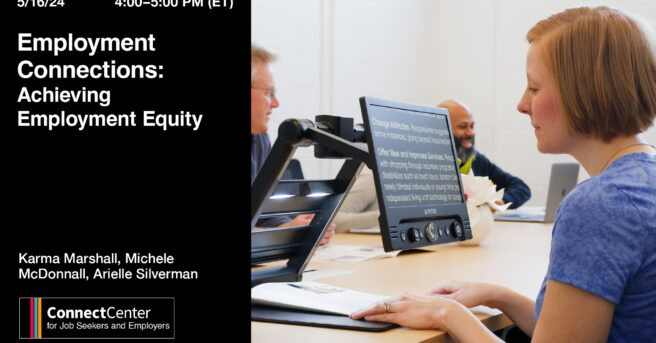
  • A CCTV, also called an electronic video magnifier, is equipment for reading that consists of a stand-mounted or hand-held video camera that displays a magnified image on a video monitor, television screen, or computer monitor.
  • A CCTV can help you identify your bills by magnifying each denomination. After you identify each bill, you can use the folding system or place your bills in an adaptive wallet that separates them by denomination.

See Non-Optical Devices for more information about CCTVs.

Identifying Coins

It is possible to identify your coins by touch. In the United States, coins have smooth smooth or ridged edges and are different sizes:

  • Nickels and pennies have smooth edges, and the nickel is larger than the penny.
  • Quarters and dimes have ridged edges, and the quarter is much larger than the dime.
  • You can feel and hear the ridged edge by running your fingernail across it.

Managing Your Loose Change

After a shopping trip, you may end up with a pocket of loose coins. You can manage and identify your coins by placing them into separate labeled containers, or into containers of different sizes. If your containers are the same size, you can label each container in large print, braille, or any other method that works for you.

See Labeling and Marking, What Is Braille?, and Large Print Books, Magazines, and Periodicals for more information about any of these labeling options.

You can also use a coin organizer or a multi-pocket coin purse to sort, identify, and manage your loose change.

Another method is to deposit all of your loose change into one container; when the container is full, bring it to your nearest change machine (usually at a local supermarket) and obtain bills for the coins you deposit — less a small percentage fee.

Are there special wallets that can help me arrange and identify my money?

There are a number of adaptive wallets that can help you arrange and separate your bills and coins:

Organizer Wallet

The Organizer Wallet has separate compartments for different bills and credit cards. Find this wallet at Independent Living Aids web site Independent living aids.

men's wallet The Soft Leather Wallet has separate compartments for different bills and credit cards. Find this wallet at Independent Living Aids, Inc. Independent living aids

Is there a safe way to carry money?

If you're worried about purse snatchers, here are two possible alternatives to a purse or wallet:

  • Waist Pack: A small waist pack can discourage thieves. It can be hidden or covered by a shirt or coat and usually has one or two zippered compartments. It can be useful when you're in an unfamiliar place or if you don't want to carry a bulky or heavy purse or wallet.
  • Zippered Pockets: Purchase a lightweight jacket or coat with zippered pockets. You can conceal and secure your money, house keys, and other personal items inside the zipped pockets.

See Shopping Tips for additional hints and techniques to help you handle and identify your money when shopping.

See Sources of Products for Independent Living for more information about adapted wallets, totes, coin purses, and talking products.

See Using Bank Services and Credit Cards for more information on ATMs, large print checks, and other banking strategies.

Additional Resources for Money Identification


Copyright ©2011 by American Foundation for the Blind. All rights reserved.